

Asset / Network Evaluation
The first stage of the DSP. It establishes a baseline understanding of the transport system under consideration, bringing together information from multiple DSP modules into a common picture of how the system currently operates, performs and supports users.
Purpose
The process considers assets, networks, services, users, interdependencies, constraints, and performance, resilience, sustainability and risk characteristics, in order to understand the current state of the system.
It draws on five modules, plus other datasets, studies and organisational knowledge:
Not an inventory exercise
The handbook is emphatic that the purpose is not simply to describe what assets exist. It is to understand:
- how assets function as part of wider transport systems
- how those systems currently perform
- what constraints and vulnerabilities exist
- where current condition, performance, resilience and sustainability characteristics contribute to future risks and their consequences
An asset list is a starting input, not the deliverable.
Everything later in the DSP depends on this stage. It provides the evidence base from which emerging risks, risk-reduction needs, and the requirements for problem framing can be identified.
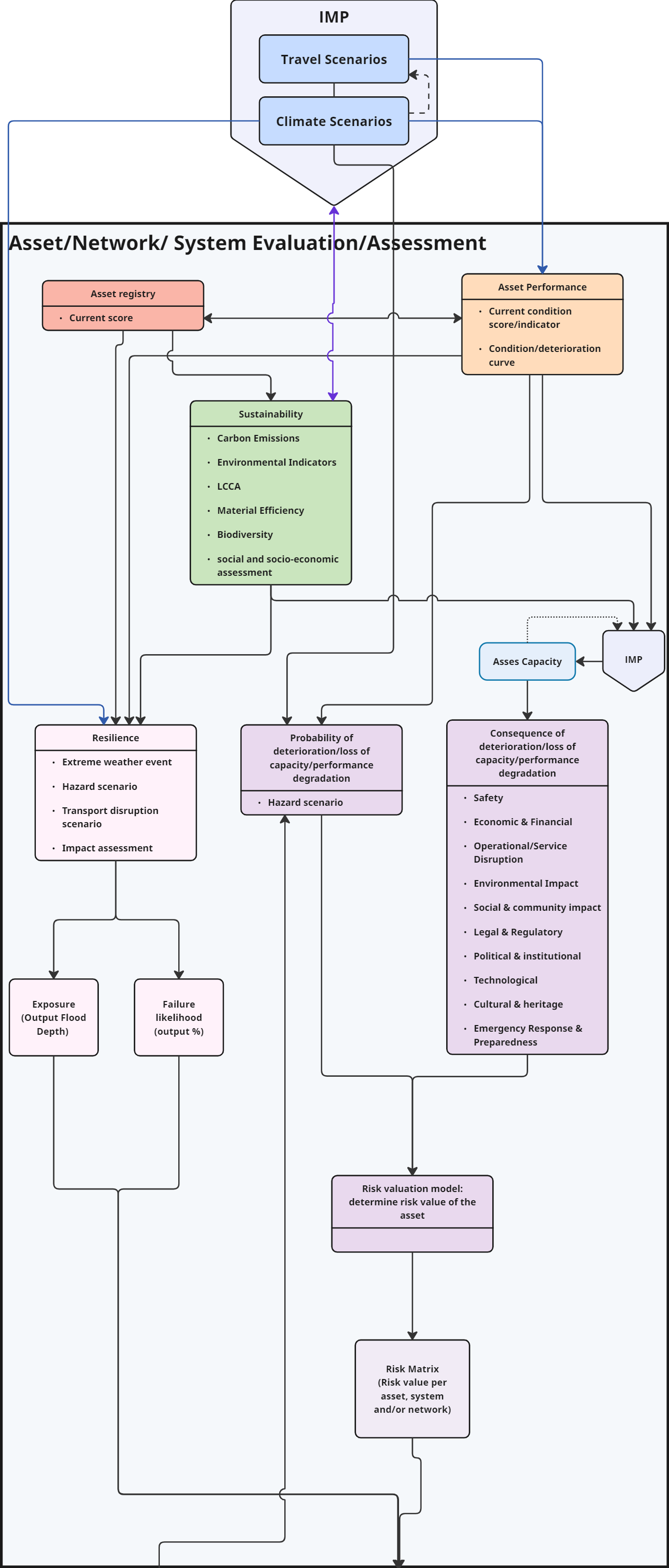
Figure 1. The Asset / Network Evaluation process.
Questions answered
Asset and network context
- What assets, networks, services and users are included within the scope?
- How does the transport system currently function?
- What role does each asset, route or network play in supporting transport services?
System relationships and dependencies
- What interdependencies exist between assets, networks, services, users and organisations?
- Which assets or routes are critical to the operation of the wider system?
- How do failures or performance reductions in one part of the system affect other parts?
Performance and capability
- What is the current condition and performance of the assets and networks?
- What levels of service are currently being delivered?
- What capacity is currently available?
- What performance limitations, bottlenecks or constraints are already evident?
- How are condition, performance and capacity expected to change over time?
Constraints and vulnerabilities
- What technical, operational, environmental, financial or policy constraints currently influence system performance?
- What vulnerabilities or performance concerns are already known?
- What assets, routes or services appear most susceptible to future deterioration, disruption or loss of performance?
- What emerging issues may affect future performance?
Understanding the risk
- What are the principal risks affecting the current and future transport system?
- What are the likely consequences of deterioration, failure or loss of performance?
- Which assets, routes or services present the greatest levels of concern?
- How do condition, capacity, resilience and sustainability influence current risk levels?
Evidence and information
- What evidence is currently available to support decision-making?
- What information gaps, uncertainties or assumptions exist?
- What additional information may be required for subsequent DSP stages?
Decision support
- Which assets, networks or services require further investigation?
- Which vulnerabilities, constraints or performance issues require further assessment?
- What risk-reduction needs are already evident?
- Which issues should be carried forward into Problem Framing and Scope?
- What baseline evidence is required to support future risk assessment, option assessment and investment decisions?
The nine steps
The level of effort depends on the maturity of available information, the scale of the assessment, and the complexity of the system being considered.
Step 1: Define the scope of the evaluation
Define the assets, networks, services, users, organisations and geographical area relevant to the decision.
The scope should capture infrastructure, services and stakeholders that significantly influence, or are significantly influenced by, the decision.
Who decides what counts as significant
The handbook hands this judgement to the user, and asks only that it be proportionate to the scale, complexity and objectives of the assessment. Where uncertainty exists, assumptions and exclusions should be documented.
Recording what was deliberately left out is what allows a later reviewer to tell a considered boundary from an oversight.
Step 2: Review available evidence
Identify and review existing information, drawn from the five DSP modules plus existing studies and reports, monitoring programmes, inspection records and previous assessments.
The objective is to establish the current evidence base and identify any significant information gaps.
Step 3: Establish current asset performance
Use the Asset Performance module to understand current condition, current performance, serviceability, deterioration trends, forecast future performance, and existing performance concerns.
The objective is to understand how effectively assets deliver their intended functions, and how that is expected to change over time.
Step 4: Assess capacity and service delivery
Assess whether current and future capacity is sufficient to support required services, considering:
| Current capacity | What the system can carry now |
| Future capacity | What it will be able to carry |
| Service provision | What is being delivered |
| Utilisation | How heavily it is used |
| Demand forecasts | What will be asked of it |
| Capacity constraints | Where headroom runs out |
| Bottlenecks | Where the constraint binds first |
| Critical routes and services | What cannot be allowed to fail |
Step 5: Assess sustainability, resilience and system interdependencies
Use the Sustainability, Resilience and System Interdependencies modules to understand wider system characteristics.
This may cover sustainability indicators and objectives, carbon impacts, environmental impacts, resource efficiency, hazard exposure, system vulnerabilities, transport disruption impacts, recovery characteristics and adaptation considerations.
Step 6: Establish the risk profile
Use the Risk Assessment module to identify likelihood and consequences of deterioration, failure or performance degradation; current and future risks; critical assets and services; and current and emerging areas of concern.
If no risk information exists yet
Where risk information is unavailable, the relevant elements of the Risk Assessment module may be applied here to develop an initial risk profile, reflecting both current conditions and reasonably foreseeable future changes.
The stage does not stall waiting for a risk assessment that was never done.
Step 7: Identify constraints, uncertainties and information gaps
Review the evidence and identify technical, operational, environmental and policy constraints, alongside information gaps, key assumptions and uncertainties.
This establishes the strengths and limitations of the evidence base, not just its contents.
Step 8: Develop an integrated understanding of the system
Bring the preceding steps together into a documented understanding. Note that each item is asked for in two tenses:
| Current state | Expected change |
|---|---|
| How the system is currently structured | How the structure is expected to change |
| How the system currently performs | How performance is expected to change |
| Existing dependencies and interrelationships | How those are expected to change |
| Existing constraints and vulnerabilities | Emerging constraints and vulnerabilities |
| Current risks and their consequences | Future risks and their consequences |
Plus available evidence and information gaps.
The point of the two-tense structure
A baseline that only describes today goes out of date the moment it is written. One that also records the expected direction of travel stays useful, and makes it possible to tell later whether the system changed as anticipated.
The aim is a shared baseline understanding, agreed across the parties involved.
Step 9: Prepare outputs for Problem Framing and Scope
Document the findings and transfer them onward. The outputs should let the next stage identify emerging risks, define risk-reduction needs, develop problem statements, establish assessment objectives, and scope subsequent activities.
The process is complete when a documented baseline understanding has been established and made available to the next stage.
Evidence gathering
The process may be run at any scale, from a single asset through to a corridor, network or wider transport system. The evidence gathering required varies accordingly.
| Evaluation type | Emphasis |
|---|---|
| Asset-focused | Existing asset-management information, technical assessments, inspection records, monitoring data |
| System-focused | Engagement with asset owners, operators, planners, users and other stakeholders, to understand system behaviour, interdependencies, organisational interfaces and service requirements |
Most evaluations draw on both. The balance should reflect the complexity of the system and the extent to which wider system interactions influence the decision.
Desk studies and review of existing information
The process should normally begin here. Existing information provides the foundation for understanding assets, networks, performance, risks and constraints before additional investigation is undertaken.
DSP module outputs: Asset Registry information, Asset Performance information, Risk Assessment outputs, Resilience Assessment outputs, Sustainability Assessment outputs.
Supporting sources: existing asset management plans, inspection records, monitoring records, maintenance and renewal records, previous studies and reports, demand forecasts, climate and hazard assessments, existing modelling outputs, regulatory and policy documents.
Interviews and expert engagement
Interviews may be used to validate existing information, capture organisational knowledge, and improve understanding where information is incomplete, uncertain or unavailable.
Participants may include asset managers, infrastructure owners, infrastructure engineers, operations teams, maintenance teams, transport planners, resilience specialists, sustainability specialists and subject-matter experts.
Interviews do different work at different scales
For asset-focused evaluations, interviews mainly support the interpretation and validation of technical information.
For system-focused evaluations, they provide insight into system behaviour, interdependencies, operational constraints and future pressures that are not readily captured within existing datasets. That is knowledge which exists only in people's heads, and no amount of data review will surface it.
Workshops and collaborative activities
Workshops are most valuable where the assessment needs a broader systems perspective, or where information is distributed across multiple organisations and stakeholder groups.
Activities may include:
- System mapping
- Identification of interdependencies
- Identification of critical assets and services
- Review of network constraints
- Validation of system boundaries
- Identification of vulnerabilities and critical functions
- Discussion of future pressures and uncertainties
- Identification of information gaps
They may not be required for asset-focused evaluations, but add significant value when evaluating transport systems as interconnected systems-of-systems, where dependencies, organisational interfaces and stakeholder requirements shape overall performance.
Additional data collection and investigations
Where existing information is insufficient:
| Asset-focused | System-focused |
|---|---|
| Asset inspections | Capacity assessments |
| Condition assessments | Traffic and passenger surveys |
| Monitoring activities | Network surveys |
| Asset verification surveys | Environmental surveys |
| Site investigations | Hazard assessments |
Proportionality test for new data collection
The extent of additional data collection should be proportionate to three things: the decision being supported, the significance of the information gap, and the value of the information expected to be obtained.
The third is the one most often skipped. Data that will not change the decision is not worth collecting, however large the gap it fills.
Information gaps and uncertainty
Where gaps remain, their implications, associated assumptions and uncertainties should be documented and carried forward into subsequent DSP stages, to inform later Risk Assessment, Problem Framing and Scope, and Risk Reduction Analysis activities.
Iterative steps
The process is intended to be iterative. As understanding improves, evidence appears, assumptions change, boundaries shift, and risks or interdependencies emerge or change.
| Iterative activity | What triggers it |
|---|---|
| Refinement of system boundaries | Additional assets, services, users, organisations or systems turn out to belong in scope |
| Evidence review and gap closure | Significant gaps, uncertainties or inconsistencies are found, prompting further inspections, surveys, modelling, interviews or workshops |
| Updating performance and capacity understanding | New information changes asset performance, capacity, serviceability, deterioration or future performance |
| Reassessment of dependencies | Previously unidentified asset, network, organisational or service dependencies surface |
| Review of risks and consequences | New information alters assessed likelihood, consequences, or the overall risk profile |
| Stakeholder review and validation | Engagement surfaces additional evidence, alternative interpretations, emerging concerns or future requirements |
When to stop iterating
Complete certainty is not the target
Iteration should continue until the evidence supports progression to the next stage, not until everything is known.
The handbook states it plainly: the evaluation does not require complete certainty. The objective is an appropriate level of understanding for identifying emerging risks, defining risk-reduction needs, and supporting Problem Framing and Scope.
Output schema for the next process
The principal output is a documented baseline understanding of the transport system, detailed enough to inform problem statements, assessment objectives and system scope in the next stage.
| Activity | Key outputs | Input to Problem Framing and Scope |
|---|---|---|
| Asset and network context | Defined assets, systems, services, users and assessment boundaries | Defines the system under consideration |
| Asset registry review | Asset inventories, characteristics, relationships and available information | Establishes the asset baseline |
| Asset performance assessment | Current condition, performance, capacity, serviceability and future performance forecasts | Identifies current and future performance concerns |
| System interdependencies assessment | Critical assets, dependencies, interfaces and system relationships | Supports system mapping and boundary definition |
| Sustainability assessment | Sustainability indicators, environmental impacts and wider considerations | Supports understanding of wider system implications |
| Resilience assessment | Hazard exposure, vulnerabilities, resilience characteristics and recovery considerations | Supports identification of future challenges and vulnerabilities |
| Risk assessment | Current and future risks, likelihoods, consequences and risk profile | Supports identification and prioritisation of issues requiring attention |
| Information gap assessment | Information deficiencies, assumptions and uncertainties | Highlights areas requiring further investigation |
| Integrated system understanding | Consolidated understanding of structure, performance, dependencies, constraints and risks | Provides the evidence base for problem definition |
Overall output
- Documented baseline understanding of the transport system
- Current and future performance profile
- Current and future risk profile
- Understanding of system dependencies and interrelationships
- Identification of vulnerabilities and constraints
- Identification of information gaps and uncertainties
- Evidence base for Problem Framing and Scope
Sources
- Burgess, G., Enzer, M., Schooling, J., et al. (2020). Flourishing Systems: Re-envisioning infrastructure as a platform for human flourishing. Centre for Digital Built Britain.
- Highways Maintenance Efficiency Programme (HMEP) (2013). Highway Infrastructure Asset Management Guidance Document. Department for Transport.
- Hooper, R., Armitage, R., Gallagher, A., and Osorio, T. (2009). Whole-life Infrastructure Asset Management: Good Practice Guide for Civil Infrastructure (CIRIA C677). CIRIA.
- Kumar, J., Karim, R., Dersin, P., and Thaduri, A. (2024). A Performance-Driven Framework with a System-of-Systems Approach for Augmented Asset Management of Railway Systems. International Journal of System Assurance Engineering and Management.
- Saidi, S., Kattan, L., Jayasinghe, P., Hettiaratchi, P., and Taron, J. (2018). Integrated Infrastructure Systems: A Review. Sustainable Cities and Society, 36, pages 1 to 11.